-
-
Project ManagementQuality ManagementAgile and ScrumCyber SecurityBusiness ManagementBig DataCloud ComputingDigital Marketing
Learn to master Scrum… without ever changing how your team actually works
The CSM Certification Course is designed for beginners in agile as well as for those experts who are seeking to enriching agile ways of working, adaptable to their organizations. The course will cover Scrum with great detail, allowing you to use theoretical knowledge to lead teams and deliver projects effectively. You will learn to enable Scrum ceremonies, engage stakeholders, and create a cooperative team culture. After the CSM training, you will have to take up the CSM Certification Online exam which will confirm your skills, allowing you to pursue more agile tasks and create a more prosperous career path for you.
Training conducted by Certified Scrum Trainer
Exercises and games to understand scrum practices
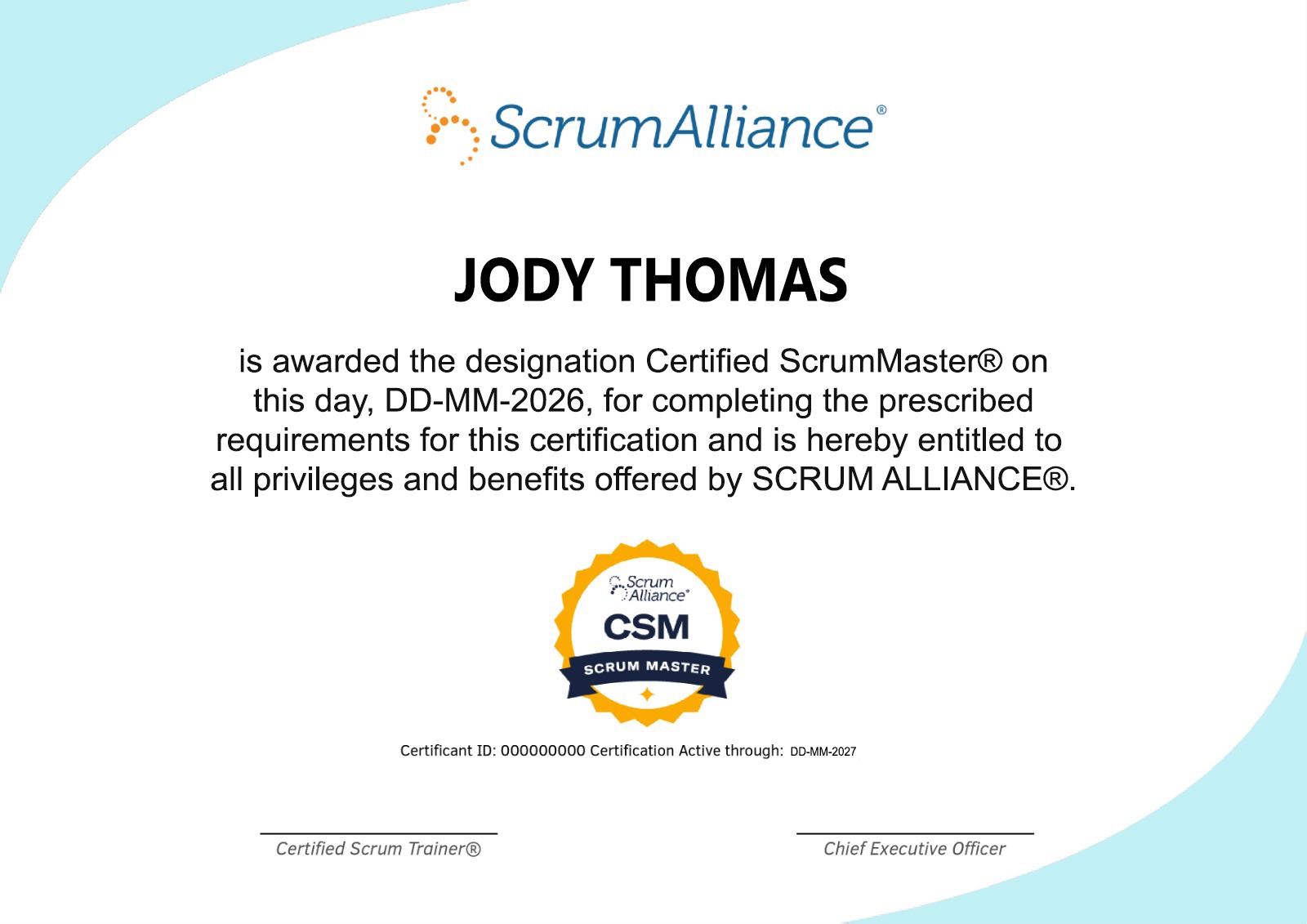
Earn a Scrum Alliance certificate with two-year membership
Tips and techniques to clear the CSM exam
16 SEUs and 20 PDUs for your CSM certification
2 simulation exams
Scrum and Agile Methodologies
Scrum Lifecycle
Daily Scrum and Review
Distributed Scrum
Scrum Terminologies
Roles involved in Scrum

Get dedicated assistance for your team
What are the prerequisites for CSM Training?
Prerequisites :
Eligibility Criteria :
Who Are the Ideal Participants for Tutorial Consulting? CSM Training?

A CSM certification helps improve Agile project management skills, fosters team collaboration, increases career opportunities, and provides a 2 year Scrum Alliance membership, including access to exclusive resources and a global network.
CSM Certification has no expiration date. However, It must be renewed every 2 years to remain valid.
Unlike other certifications, CSM certifications have no prerequisites. However, prior exposure to Agile and knowledge of basic Scrum is helpful.
The CSM certification exam consists of 50 MCQs. To pass, you must achieve a score of at least 74% (37 correct answers).
You get 2 free attempts within 90 days of completing the CSM training. Attempts made after 2 might come at a cost.
In case you are failed the CSM certification exam, you can take it up immediately.
“Class was somewhat dry for the first part but understandably so due to the material. Once we moved t...” View More

“As an instructor, it's nice to have great communications from the home office as to what to expect a...” View More

“Great class! It was a ton of information to take in, but the instructor made it easy to follow and p...” View More

The Certified ScrumMaster® (CSM) Course is designed to help you master the basics of Scrum and empower you to lead Agile projects. It is a perfect course for professionals who want to boost their project management capabilities.
To achieve the Certified ScrumMaster designation, you must take Certified Scrum Training (CSM®) from a Certified Scrum Trainer (CST), pass the CSM certification exam, and agree to the Scrum Alliance license agreement.
To enroll in the CSM training course, you should look for an accredited provider like Tutorial Consulting that provides in-person or online courses.
Yes, but specifically, once you complete the CSM, your training provider will issue you a course completion certificate.
Certified Scrum Trainers (CSTs) are experienced Agile practitioners accredited by the Scrum Alliance. They have a proven record of successful teaching and mentoring in Scrum practices.
The training goal in CSM is to provide greater knowledge of Scrum concepts, how to work with a team, and prepare to complete the CSM certification exam.
The CSM training is relevant to project managers, team leads, developers, testers, product owners, and anyone else interested in adopting the Scrum framework.
CSM certified professionals have an average salary of $117,000 per year in the US.
Your 2-year membership of Scrum Alliance opens numerous avenues to exclusive resources and events and other people like you working with Agile to propel your Scrum skills and career!
A Scrum Master should have leadership skills, communication skills, conflict resolution skills, time management skills, facilitation skills, and exhaustive knowledge of Agile and Scrum practices.
Skill you’ll gain: Cost management, Project cost estimating
Skill you’ll gain: Risk Strategy & Planning, Risk Identification
Skill you’ll gain: Advanced DMAIC Mastery, Risk Management
Skill you’ll gain: Process Improvement, DMAIC Methodology
Skill you’ll gain: Project Management Fundamentals, Risk & Quality Management
Skill you’ll gain: Agile Mindset & Principles, Value-Driven Delivery
Skill you’ll gain: Scrum and Agile Framework, Product Ownership
Copyright @ 2018-2026 Tutorial Consulting. All Rights Reserved.
Avail Group Discount